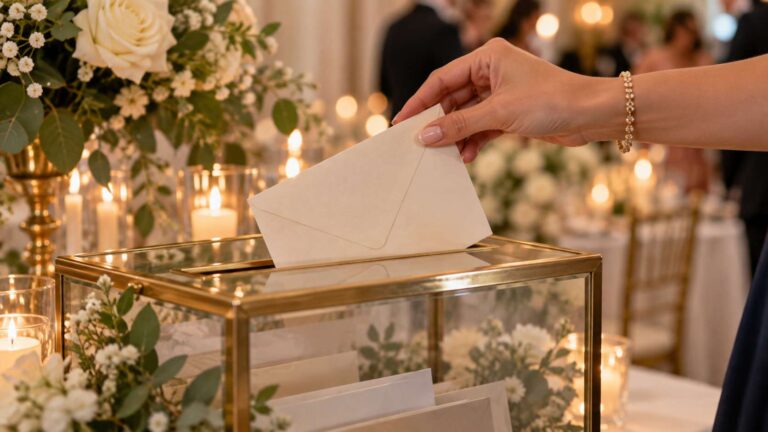

How Much to Tip Wedding Vendors, From the DJ to the Delivery Crew
More than 700 newlyweds participated, and the results suggest that wedding tipping is common, although expectations vary considerably between services.
According to Zola’s 2026 Wedding Spend Survey, 73% of recently married couples tipped their caterer, while 67% tipped their DJ or band. Photographers received gratuities from 70% of respondents.
How much should you tip wedding vendors? A DJ typically receives $50 to $150, delivery workers receive around $5 to $20 each for routine jobs, and hair and makeup artists generally receive 15% to 25%. Catering gratuities can run 15% to 20% of the food and beverage bill when they aren’t already included. These are customary ranges, not mandatory payments.
Before preparing a single envelope, check the contracts. A wedding can involve more than a dozen vendors, and paying an additional gratuity on a bill that already includes one is an expensive mistake.
Your $1,000 Service Charge May Not Be a Tip
Imagine a wedding catering contract with a $5,000 food and beverage bill. Below it sits a 20% service charge, adding $1,000.
You assume the extra money goes to the servers. Then a wedding checklist recommends tipping the catering team another 18%, which would mean an additional $900.
Suddenly, you’re considering $1,900 in extra charges without knowing how the first $1,000 will be distributed.
The distinction matters under federal law.
According to the U.S. Department of Labor, a mandatory service charge is legally different from a voluntary tip. Businesses may distribute service-charge revenue to employees as wages, but the money doesn’t automatically belong to the servers.
That means an invoice marked service charge tells you very little about how much the staff will receive.
Ask the catering manager one question before signing:
“Does the service charge include staff gratuities, and which employees receive that money?”
Request a written explanation. Some venues already include gratuities in their contracts, while others use service charges to cover administrative expenses. The answer determines how much additional money you should budget.
What Goes Into Each Wedding Tip Envelope?

The following amounts reflect recommendations from The Knot’s January 2026 guide and Zola’s 2026 wedding advice.
| Wedding vendor | Suggested gratuity | When to give it |
| DJ | 150, optional | End of reception |
| Photographer or videographer | 200 per person, optional | End of coverage or after photo delivery |
| Hair and makeup artists | 15–25% of service cost | After the appointment |
| Band musicians | 50 per musician, optional | After the performance |
| Day-of coordinator | 150 | End of reception |
| Catering and waitstaff | 15–20% of food and beverage costs, if not included | Through the catering manager |
| Delivery and setup crew | 20 per person for routine jobs; more for substantial setup | After delivery or setup |
| Transportation driver | 15–20%, if not included | After the final ride |
These ranges provide a starting point. The number of workers, their responsibilities, and your contract should guide the final amounts.
One exception worth checking concerns officiants. Religious officiants may prefer a donation to their institution. Public officials may face restrictions on personal gratuities, so confirm the applicable policy before preparing cash.
For photographers and independent business owners, additional money is generally discretionary. A personal thank-you note or detailed review can also recognize excellent work.
A Wedding Photographer Explains Why Cash Isn’t Everything

The Knot interviewed wedding photographer Jenny DeMarco, who owns a photography business in Austin, Texas. She explained that photographers generally appreciate gratuities, particularly when couples recognize the effort of the entire team after the event.
Zola also published the perspective of photographer Vital Wilsh, who gave a useful account of how an independent professional views tips:
“As a photographer, I don’t expect any tips.”
Wilsh explained that the business already charges enough to operate properly, although additional gratuities are appreciated.
That distinction deserves attention. When you hire an independent photographer, you’re paying a negotiated fee for professional work. The photographer has already factored business expenses into the price.
An additional $100 can be a generous acknowledgment of exceptional service. It isn’t a requirement simply because the photographer attended your wedding.
There’s also the question of assistants.
Suppose your photographer brings a second shooter who spends six hours photographing guests while the lead photographer handles the ceremony. Zola suggests $50 to $75 for photography assistants when couples choose to tip them.
We’d consider that person separately rather than assuming the lead photographer automatically shares every gratuity.
The Cake Delivery Driver Leaves Before Anyone Starts Dancing
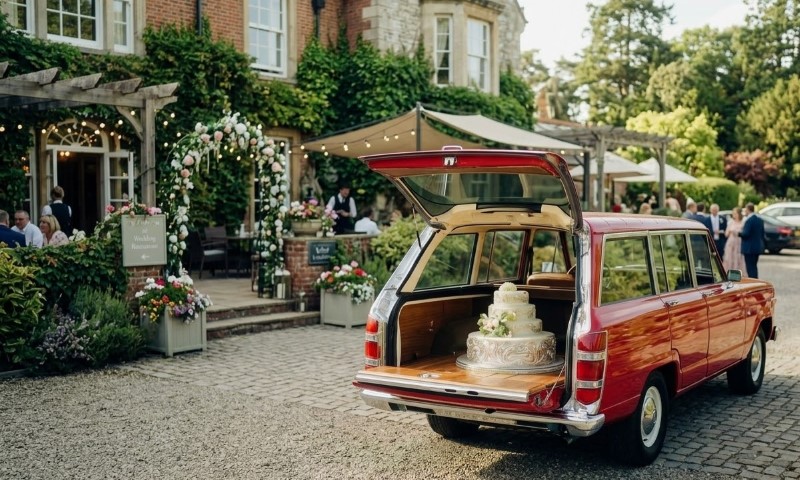
Wedding tipping guides usually devote plenty of attention to the DJ and photographer. Delivery workers are easy to overlook because many finish their jobs before the guests arrive.
In Zola’s delivery staff guide, McCall Minnor distinguishes between a simple bakery delivery and the physically demanding work involved in setting up rental equipment.
For example, imagine an outdoor wedding where four workers unload 120 chairs, carry them across the venue, and arrange them before the ceremony.
At $20 per worker, the total gratuity would be $80.
Compare that with a driver who transports a wedding cake directly to the venue’s kitchen. Zola’s suggested bakery delivery range is $5 to $10 per person.
Use the work performed as the deciding factor. Carrying rental equipment across a large property deserves different consideration from a straightforward delivery.
There’s another detail worth confirming: the delivery workers may be employed by a separate company. Paying the florist or rental company doesn’t necessarily mean the driver receives a gratuity.
Before the wedding, ask who handles transportation and setup. That gives you a chance to prepare the correct number of envelopes.
A $460 Tip Budget, With Catering Already Covered
View this post on Instagram
Here’s an illustrative calculation for a couple whose catering contract already includes staff gratuities.
They still want to recognize other members of the wedding team.
| Recipient | Amount |
| DJ | $100 |
| Photographer | $100 |
| Hair and makeup team, 20% of a $400 bill | $80 |
| Four setup workers, $20 each | $80 |
| Day-of coordinator | $100 |
| Total | $460 |
The math is straightforward, and each payment has a designated recipient. The $460 figure is an example rather than a minimum wedding tipping budget.
For couples who have already reached their spending limit, optional tips can be reduced or replaced with personal thank-you messages. We’d prioritize customary service gratuities that aren’t included in the contracts before allocating money to discretionary gifts.
The calculation also reveals why small payments add up. Four delivery workers at $20 each account for $80, nearly as much as the DJ’s $100 gratuity.
Give the Envelopes to Someone Who Isn’t Getting Married
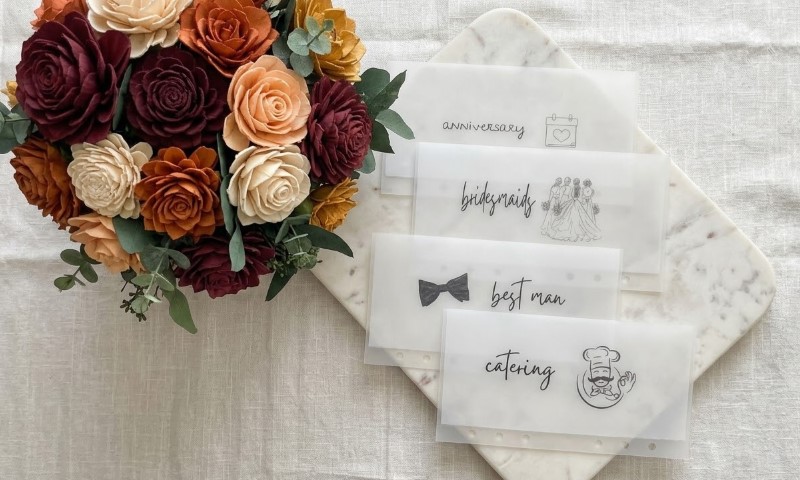
We wouldn’t recommend carrying several hundred dollars in envelopes while greeting guests and taking wedding photographs.
Give the envelopes to your planner or another trusted person who can follow the schedule. Label each one with the recipient’s name and the amount, and confirm the number of delivery workers before the wedding.
The timing matters. Rental crews may complete their setup at 9 a.m., while musicians finish after midnight. Your designated helper needs to know who receives each envelope and when.
Wedding planner Rachel Held, founder of Confetti & Co. Events in New Orleans, told The Knot that band gratuities can be given individually or passed to the bandleader for distribution.
That’s a useful option when a band has several musicians. It’s still worth confirming the arrangement so everyone receives the intended amount.
Keep a small reserve for unexpected assistance, and mark vendors whose contracts already include gratuities. Any unused money can stay in your wedding budget.
Let’s Sum It Up
Wedding vendors perform different jobs, and their gratuities should reflect that. The DJ who manages the reception deserves consideration, as does the crew that gets the chairs into place before anyone arrives.
Settle the required and customary payments in advance, then use optional tips to recognize exceptional work. A photographer who stays late for an unexpected family moment might deserve something extra. So might a setup crew that handles an unforeseen problem without delaying the ceremony.
And when the DJ announces the last dance, we hope the couple is enjoying the music rather than wondering where they left the envelope marked “$100.”