How Much to Tip Your Hairdresser and What to Give the Shampoo Assistant
You go to the salon for a haircut and color. One person washes your hair, another applies the color, and the stylist you booked finishes the cut. Nearly two hours later, you’re at the checkout counter with a $180 bill. The payment terminal suggests a 20% tip, which comes to $36. Fair enough. But then you remember the woman who washed your hair. Will she receive any of that money?
In American hair salons, a tip of 15% to 20% of the pretax service cost is customary, with 20% a common choice. An additional $5 for the shampoo assistant is also appropriate. Some salons already divide gratuities among employees, so it’s worth asking about their policy before you pay.
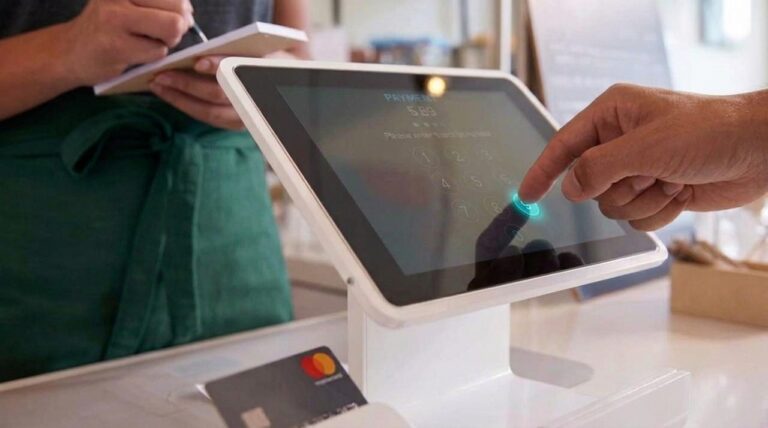
Salon tipping etiquette can vary by situation, just as it does when deciding whether to tip at a payment screen.
It’s a little strange how much math an ordinary salon visit can involve. You arrive for a haircut and leave with a question about how many people you’re supposed to reward for the same appointment.
Twenty Percent Is Common, Even for Expensive Treatments
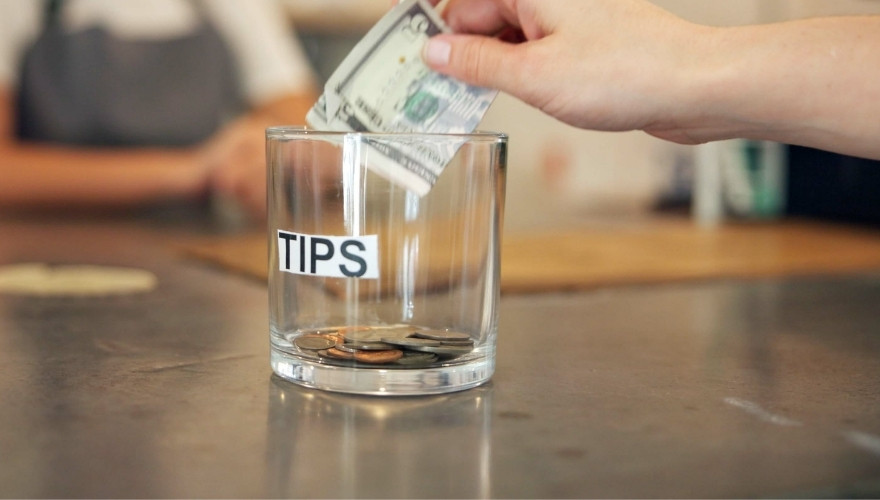
In a February 2026 Southern Living article, Kendall McElveen, owner of Kendall + Kendall Hair Color Studio, recommends a 20% tip based on the service fee.
That works out to $12 for a $60 haircut or $40 for a $200 color treatment. The dollar amount can seem substantial for an expensive appointment, especially when the service already costs several hundred dollars.
There’s another detail people sometimes overlook. If you receive a discount, the customary approach is to calculate the tip based on the original service price.
Suppose your haircut normally costs $100, but you use a coupon for 25% off. You pay $75 for the appointment, and a 20% tip based on the original price comes to $20. The stylist performed the same service regardless of the discount. That makes the original price a reasonable basis for the gratuity.
Monica Schmitz of Artistic Designs by Monica shares her advice on salon tipping, including how much to leave your hairdresser.
What if Two Stylists Work on Your Hair?
Some salons have one stylist handle the haircut and another perform the color service. In that situation, you can divide the gratuity according to the cost of each service.
For example, suppose the haircut costs $90 and the color treatment costs $150. Your total bill comes to $240, and a 20% tip equals $48. The hairstylist would receive $18, while the colorist would get $30.
A calculation like that makes sense. Both professionals receive a tip based on their work, and you know exactly where the money goes.
Does the Shampoo Assistant Automatically Get a Share?
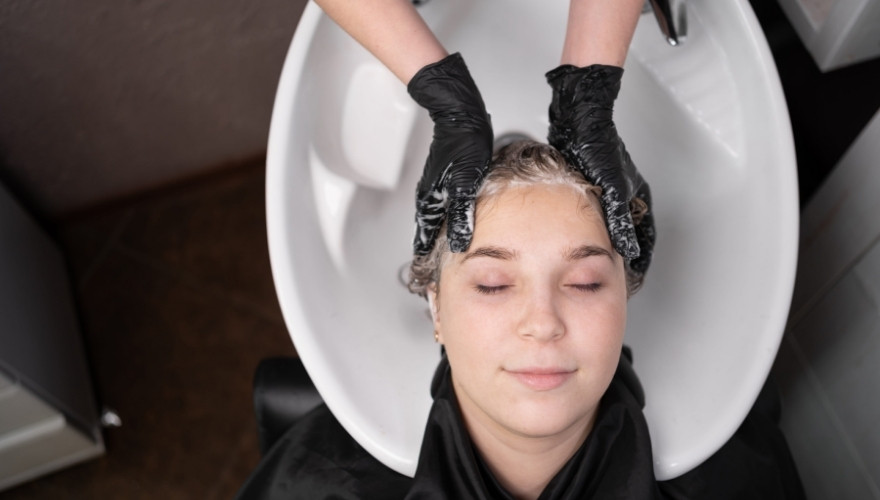
Here’s where salon etiquette gets particularly interesting.
Olivia Cassnova, colorist and co-owner of IGK Salon, described how assistants receive gratuities in a 2024 Vogue interview.
She explained that stylists sometimes share their tips with assistants, but that arrangement isn’t guaranteed. An assistant may wash a client’s hair, help apply a gloss, or assist with the blow-dry. Cassnova recommends an additional $5 to $10 for a shampoo assistant. For someone who also helps with a gloss or blow-dry, she considers a larger amount, potentially $20, appropriate.
Another hairstylist interviewed by Vogue, T.Cooper, described how extra cash gratuities have helped salon assistants she knows cover their expenses. Her account offers useful insight into a job customers sometimes overlook.
There’s no universal rule that the shampoo assistant automatically receives part of the lead stylist’s tip.
Some salons use a shared tip pool. Others allow employees to keep the money customers give them directly.
Under the U.S. Department of Labor’s rules, employers can establish lawful tip pools among eligible workers. Business owners and managers generally cannot keep tips earned by other employees or receive money through those pools. State laws may impose additional requirements.
What Actually Happens When You Pay?
Consider a $180 haircut and color appointment with three employees involved.
The colorist handles the chemical treatment. The stylist completes the haircut, and an assistant washes your hair before the final style.
At checkout, you add the customary $36 gratuity through the payment terminal. The receipt shows the total tip, but there’s no information about who receives it.
The most useful next step is to ask the receptionist: “Does my tip get shared with everyone who worked on my hair?”
If the salon distributes gratuities through a shared arrangement, the receptionist can explain how the money reaches the employees. If everyone receives tips individually, you can direct the amounts to the appropriate people.
For example, you could leave $36 for the main services and another $5 for the shampoo assistant. Your total would be $221 before any applicable sales tax.
There’s also a more discreet option.
The Real Simple salon etiquette guide, updated June 11, 2026, recommends asking the front desk to distribute gratuities when several employees have helped you.
Some salons provide small envelopes for individual tips. Others accept electronic gratuities.
That saves you the awkward task of finding every employee before leaving. Nobody needs to watch you walk around the salon with five-dollar bills.
What if You’re Unhappy With Your Haircut?
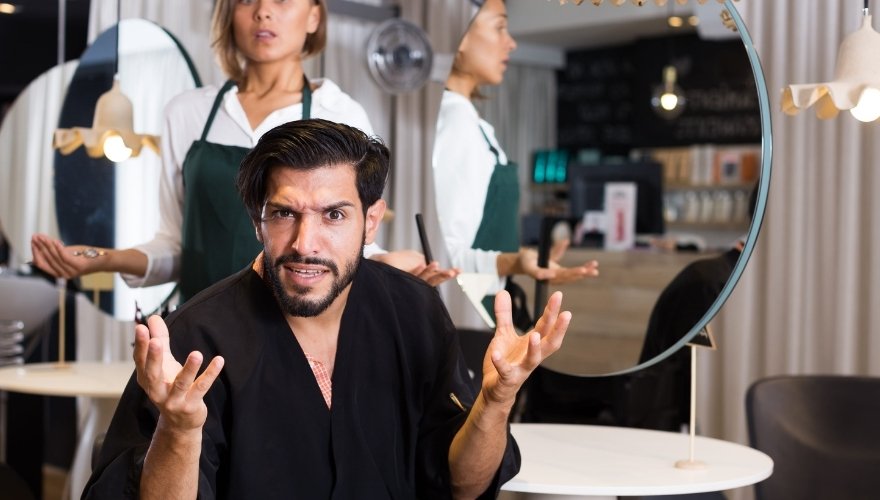
Perhaps the stylist cut more hair than you requested, or the color looks different from the photograph you brought.
Kendall McElveen recommends addressing the problem before leaving the stylist’s chair. That gives the professional an opportunity to make adjustments during the same appointment.
Consider each employee’s contribution separately. If the assistant provided excellent service but the color wasn’t what you requested, reducing everyone’s gratuity equally seems unfair. Gratuities are voluntary, and you can adjust the amount according to your experience.
Another common question concerns salon owners. The old rule that owners shouldn’t receive tips is largely considered outdated. If the owner personally provides your service, offering a gratuity is appropriate, although they may decline it.
One final detail concerns products purchased at checkout. If you buy a $35 shampoo alongside a $100 haircut, calculate the gratuity on the $100 service. The product purchase doesn’t require a tip.
One Last Thought Before You Pay
It’s interesting how much attention we give the stylist who finishes our haircut, yet we sometimes barely remember the person who first took us to the shampoo station.
The comments from working hairstylists suggest that part of the appointment deserves a little more recognition. The assistant may have helped prepare the color treatment or spent considerable time on the wash and blow-dry.
Of course, nobody expects you to keep track of every employee throughout your appointment. A brief question at the front desk can clarify who receives the gratuity.
And if the assistant gave you an exceptionally good scalp massage, remembering to thank them personally wouldn’t hurt either.