
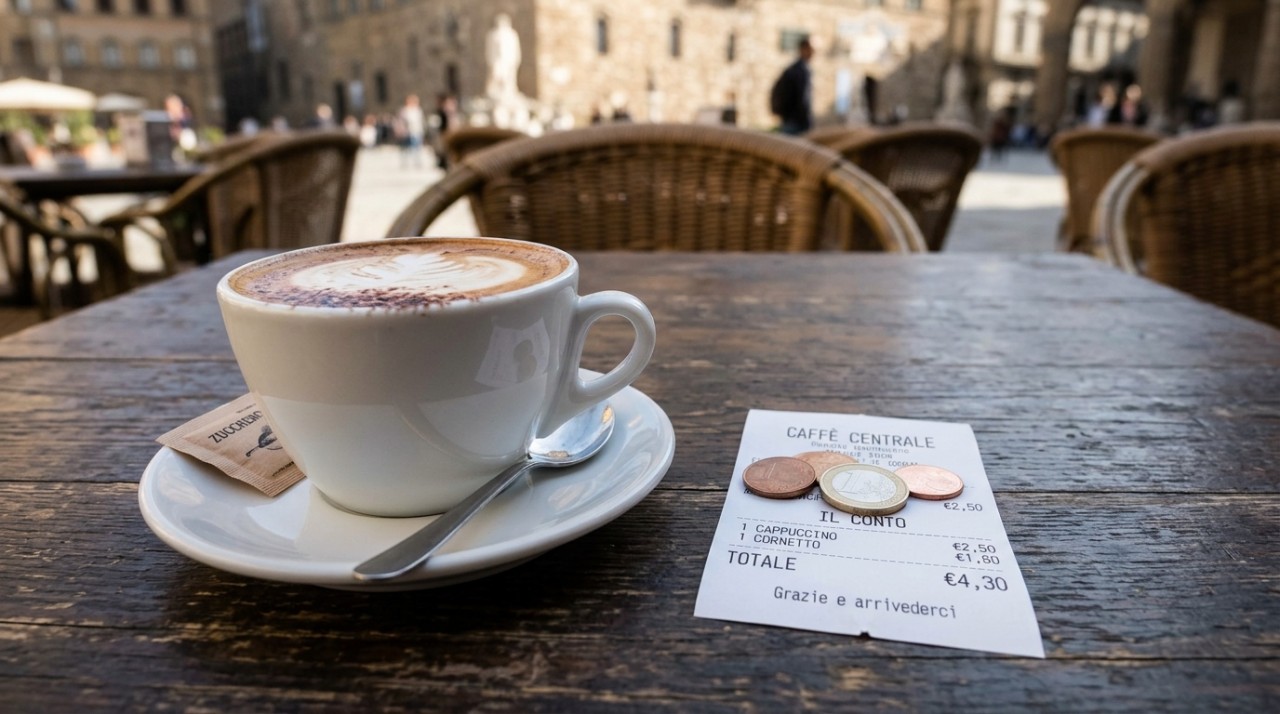
Do You Tip in Italy? That Coperto Line on Your Bill Isn’t the Tip
Tipping is not mandatory in Italy, and many restaurants add an extra charge to the bill called coperto. It usually costs €1.50 to €3 per person and applies to your seat at the table, regardless of how much you spend on food. The money goes to the restaurant, not the waiter, as the Italian consumer protection organization Altroconsumo explains.
For Americans used to adding 15% or 20% to restaurant bills, the Italian approach can seem confusing. A charge printed on the bill may look like a tip, even though it serves a different purpose.
You don’t have to leave a tip in Italy, even when the service is excellent. You can round up the bill or leave a few euros, and you only pay coperto where it’s permitted and clearly listed on the menu in advance.
Why Do You Pay Coperto Even If You Only Ordered Pasta?
View this post on Instagram
Imagine a restaurant in Florence. You’ve ordered dinner for two, and your bill includes two additional charges of €2.50 each, on top of the food and drinks.
That’s coperto, a fee the restaurant charges per guest. Traditionally, it covers the cost of setting the table, providing utensils, and similar services.
The custom has a long history. According to La Cucina Italiana magazine, its roots go back to the Middle Ages, when travelers brought their own food to inns and paid the owner to use the space and utensils.
Today, you can’t simply bring your own lunch to a restaurant, but the custom of charging for a seat at the table has survived.
Let’s look at an example.
| Item on the Bill | Amount |
| Food for two people | €32 |
| Drinks | €12 |
| Coperto, 2 × €2.50 | €5 |
| Total Bill | €49 |
Your bill comes to €49, and the waiter hasn’t received any voluntary tip yet. If you want to leave an extra euro and round the total up to €50, that’s your decision.
Three Italian Words You Should Know on Your Restaurant Bill
Before you decide how much money to leave, check how the additional charges are labeled.
| Italian Term | Meaning | Is It a Tip? |
| Coperto | Cover charge for a seat at the table | No |
| Servizio | Service charge imposed by the restaurant | Not automatically a voluntary tip |
| Mancia | Money a guest voluntarily leaves as a tip | Yes |
The distinction matters because a servizio charge sometimes appears at restaurants popular with tourists or on bills for larger groups.
According to the official Italian tourism website, tipping is voluntary, and an amount close to 10% can be a common way to show appreciation for good service. That’s not a mandatory percentage. Travel writer Rick Steves recommends a much more modest approach in his European tipping advice: a few euros for particularly good service.
In Rome, Coperto Shouldn’t Appear on Your Bill
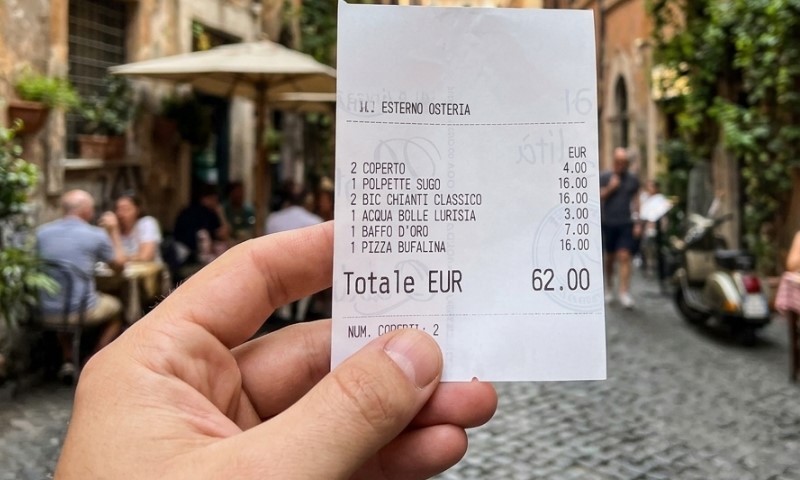
Here’s a detail many travel guides overlook.
In the Italian region of Lazio, which includes Rome, restaurants are prohibited from charging a separate coperto fee.
Article 75, paragraph 4 of the 2019 regional law explicitly prohibits additional coperto charges. However, restaurants can charge a clearly disclosed service fee in accordance with the regulations.
In other words, you shouldn’t automatically assume that every additional charge at a restaurant in Rome is illegal.
In the rest of Italy, coperto is generally permitted, provided its price is clearly stated before you order.
What About Taxi Drivers and Hotel Staff?

Tipping customs at Italian restaurants differ from those in America, and the same applies to other services.
If you’re planning a trip, these amounts are a reasonable general guide:
- Taxi driver: Round up the fare to the next euro, especially if the driver helped with your luggage.
- Hotel bellhop: Around one euro per bag is an appropriate gesture.
- Hotel housekeeping staff: A small voluntary tip is acceptable but not expected.
- Tour guide: You can leave a few euros for a good group tour and a little more for a private tour.
There’s no universal obligation to tip for any of these services, either.
Final Thoughts:
An evening at a small Italian trattoria with good pasta and a glass of local wine sounds like a pretty good plan.
If the service is excellent, rounding up the bill or leaving a few euros is a reasonable gesture. Before that, check what you’ve already been charged. And if you see coperto on the bill, you’ll know you’ve paid for your seat at the table.
Thank the waiter separately. Preferably in Italian: Grazie mille!
For a first trip to Italy, that’s a pretty good start.