Tip Screens Are Everywhere Now. Here’s Where Skipping the Tip Is Still Polite
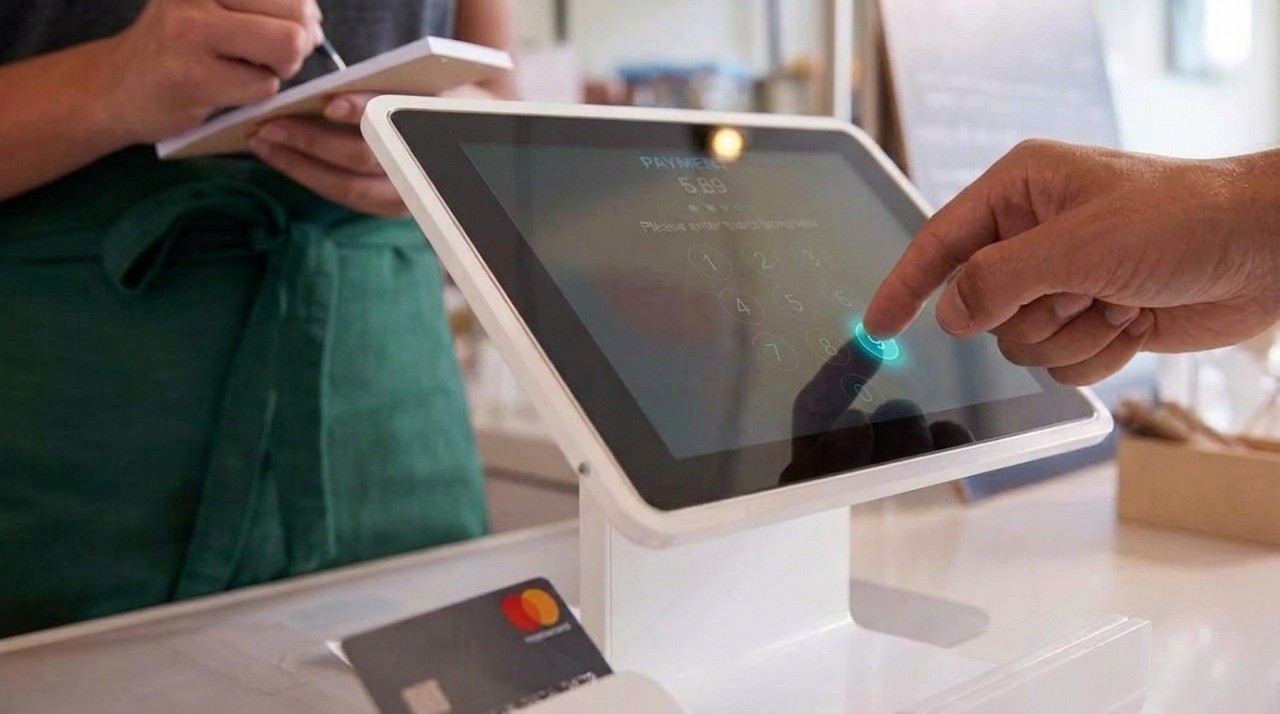
You walk into a store, grab a pack of batteries, scan it yourself, and tap your card at the payment terminal. The purchas e is practically complete. Then the screen presents three suggested tips: 18%, 20%, and 25%. An employee stands across from you as you try to find the No Tip button. It’s a rather awkward moment for someone who just came in to buy batteries.
Skipping a tip is still perfectly polite when you handle a purchase yourself, pick up a routine order at the counter, or pay for a professional service with an agreed price. A screen that suggests percentages doesn’t change the rules of American etiquette. Base your decision on the service provided, rather than the amount suggested by the terminal.
How Did an Ordinary Purchase Become a Question About Tips?
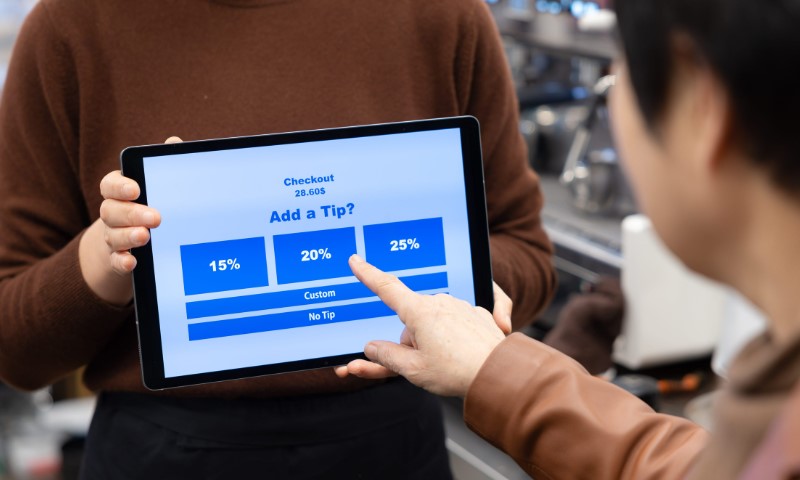
What interests us most is how quickly a routine card transaction can turn into an uncomfortable social situation.
According to a November 2023 Pew Research Center survey, 72% of American adults believe tips are expected in more places than they were five years earlier. The survey included 11,945 respondents.
Another 40% oppose businesses that suggest tip amounts to customers, compared with just 24% who support the practice.
It’s easy to see why. When an employee turns the screen toward you, declining the suggested percentages can feel impolite. Especially when someone behind you is next in line.
Etiquette expert Diane Gottsman explained in a July 2023 CNBC article that customers can decide what amount feels appropriate and freely select the option to leave no tip when the situation allows it.
Suppose you buy a $6 coffee every workday. Add a 20% tip each time, and you’ll spend an additional $24 over 20 workdays.
That money can be a nice gesture toward employees you see regularly. Still, the decision should be yours.
Where Can You Skip the Tip Without Feeling Awkward?
Let’s start with self-checkout machines. When you scan your own purchases and pay the bill, selecting zero is perfectly acceptable. The same applies to ordinary retail purchases.
The next situation is takeout.
According to the Emily Post Institute’s tipping guide, there’s no obligation to tip for a standard takeout order you collect yourself. For large or complicated orders, the recommendation is around 10%.
If an employee simply hands you a bag that’s already prepared, pay the amount on the receipt without hesitation. If someone takes extra care with a complicated order or helps carry several bags to your car, a few dollars can be a nice gesture of appreciation.
There are also situations where almost nobody expects a tip.
When a plumber charges for a repair according to an agreed price, an additional cash gratuity generally isn’t part of customary etiquette. The same applies to legal services. Offering a tip to a doctor can be particularly inappropriate because of professional standards.
Weddings with open bars present another interesting situation. The hosts may have already arranged compensation for the staff. As a guest, you can leave something extra, but check how the service is organized first.
What if a Service Charge Is Already on the Bill?
Here’s where the fine print deserves particular attention.
Suppose a restaurant automatically adds an 18% service charge to a $100 bill. Your total is now $118, before any applicable taxes.
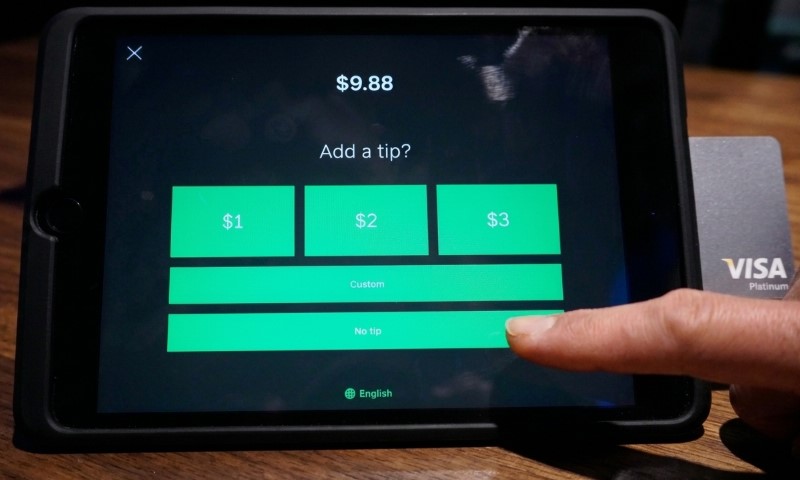
If the payment terminal then suggests another 20% tip based on the original bill, that would add $20.
Under U.S. Department of Labor rules, a mandatory service charge is legally different from a voluntary tip. The business isn’t necessarily required to distribute that service charge to employees as gratuities.
Ask what the existing charge covers before paying anything extra. There’s nothing impolite about that question.
Where Is a Tip Still Customary?
For dinner at a full-service restaurant, stick with the customary 15% to 20% of the pretax bill. Also budget a tip for a food delivery driver, based on the service provided.
Workers in traditional tipped occupations often depend on gratuities as part of their income. Their circumstances differ considerably from those of an employee at a self-checkout counter.
The most frustrating part of the whole situation may be that digital payment terminals suggest the same percentages for completely different services.
The next time a screen suggests 25% after an ordinary purchase, there’s no need to explain your decision to the employee. Select the appropriate option, say thank you, and go about your day.
After all, politeness can be expressed without an extra charge on the receipt.
And if someone does something special for you or makes a genuine extra effort? Leave a tip if you want to. It should be your decision, rather than something dictated by a screen pointed at your wallet.