
Americans Say Kids Should Stop Trick-or-Treating at 13. Some Towns Have Made It Law
A 12-year-old can spend Halloween in costume, knock on neighborhood doors, and collect candy. A year later, the same child could face a legal restriction in certain American communities. It seems rather strange that a childhood tradition can become a legal issue simply because someone has grown older.
The average age Americans suggested for children to stop trick-or-treating was 13.5, according to a 2024 Fairleigh Dickinson University poll. The average included respondents who specified an age. One-quarter preferred no age limit at all. Some US communities have gone further than public opinion and adopted actual trick-or-treat age restrictions.
What Americans Really Think About Teenagers Trick-or-Treating
Fairleigh Dickinson University surveyed 806 registered voters nationwide between October 8 and October 14, 2024. The results revealed a considerable difference of opinion about the appropriate age to stop trick-or-treating.
Among respondents who specified a cutoff, the average was 13.5 years. Another 3% opposed trick-or-treating at any age. Older voters generally preferred lower age limits. Younger adults were more receptive to teenagers who wanted to continue the tradition.
Political preferences also influenced responses. About 30% of liberals supported trick-or-treating at any age, compared with 19% of conservatives.
One detail deserves particular attention. The survey measured the opinions of registered voters, rather than the preferences of American children or teenagers. Its reported overall sampling margin of error was approximately 3.5 percentage points. Consequently, the 13.5-year figure represents an average opinion among people who provided a numerical answer. It establishes neither a national age limit nor a majority preference for an exact cutoff.
Belleville, Illinois, Uses School Grade Instead of Age
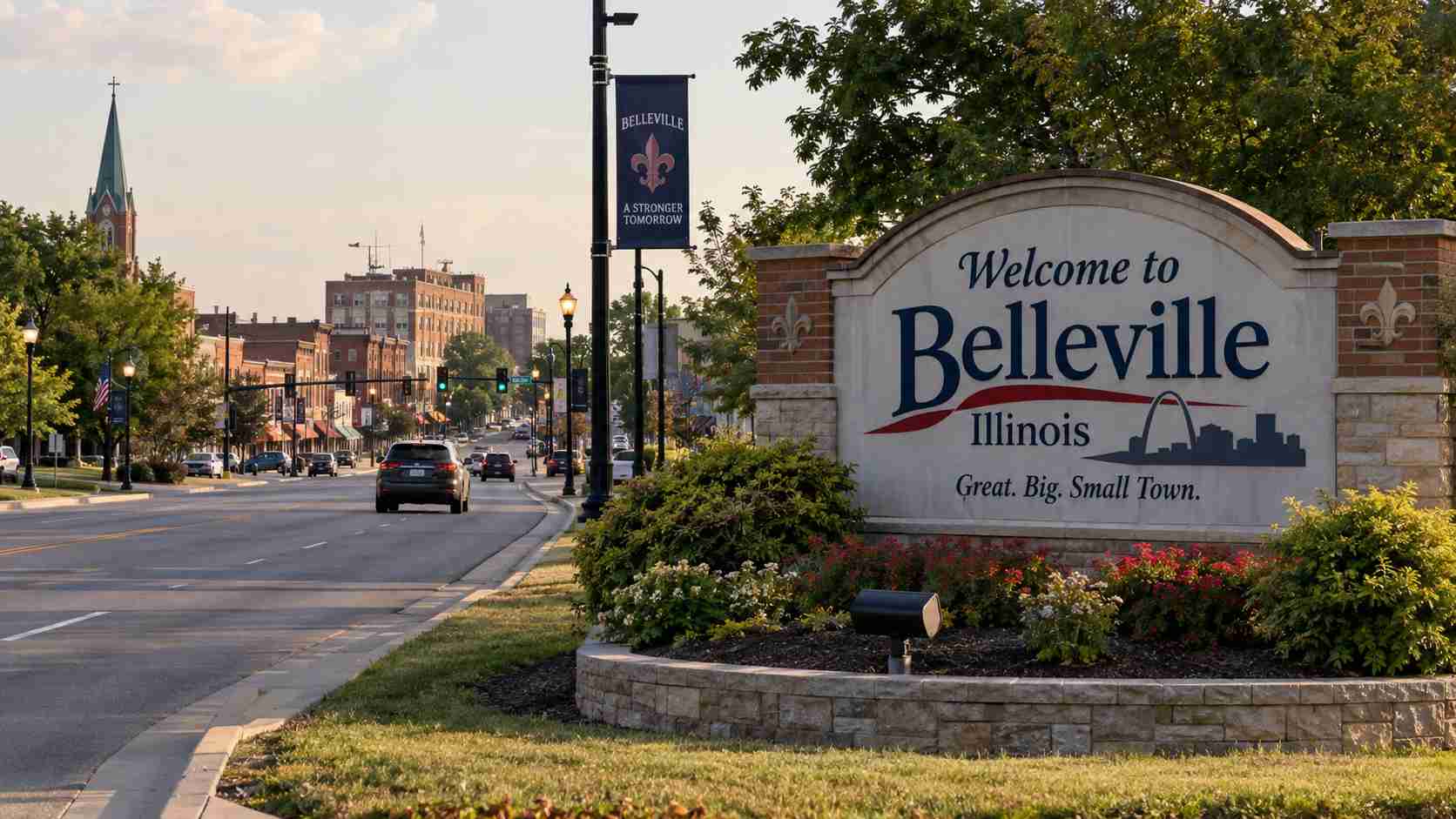
Belleville adopted its Halloween ordinance on October 20, 2008. The city’s Halloween solicitation law permits trick-or-treat visits by children in eighth grade or below.
The distinction produces an unusual situation. Consider two 13-year-old friends who live on the same street. One attends eighth grade. The other has already entered ninth grade. Under the ordinance’s ordinary eligibility rule, only the eighth grader qualifies.
The law also establishes an official trick-or-treat period between 5 p.m. and 8:30 p.m.
There are important exceptions. Students with special needs may participate with a parent, guardian, or another responsible person. The ordinance also permits participation in authorized Halloween parades and community celebrations. Homeschool students receive explicit recognition under the grade-based provision.
Belleville’s approach presents a problem that a conventional age limit avoids: two children born in the same year can have different legal eligibility because of their school placement. The city’s official Halloween information also describes its October 30, 2026, downtown event as intended for children ages 12 and younger. Families should distinguish such event-specific guidance from the wording of the broader ordinance.
Three Communities With Different Trick-or-Treat Age Limits
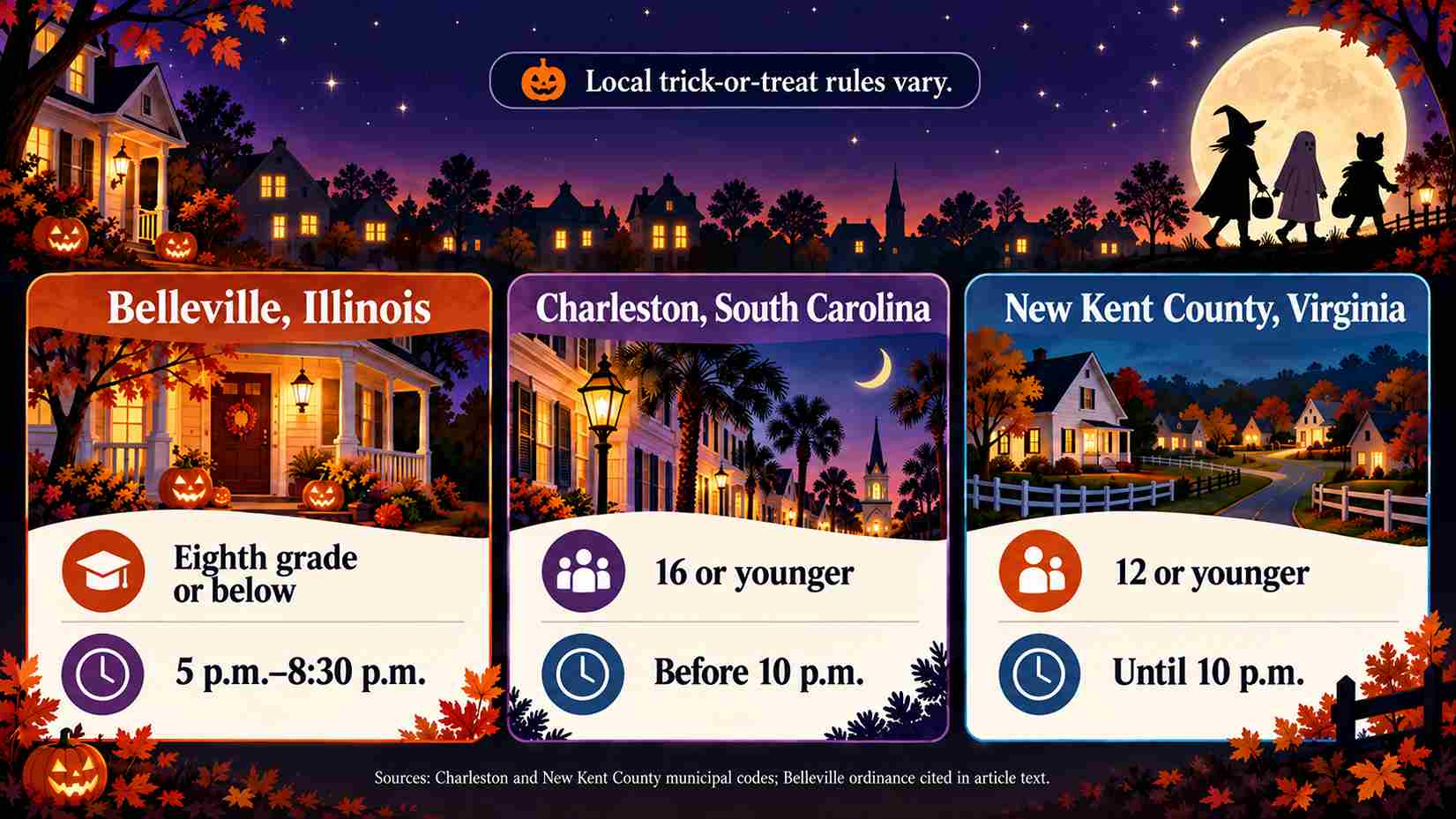
Belleville is far from the only American community with Halloween restrictions. Charleston, South Carolina, and New Kent County, Virginia, use numerical age limits.
Comparison of Published Local Ordinances
| Location | Age or grade limit | Permitted hours |
| Belleville, Illinois | Eighth grade or below | 5 p.m.–8:30 p.m. |
| Charleston, South Carolina | Age 16 or younger | Before 10 p.m. |
| New Kent County, Virginia | Age 12 or younger | Until 10 p.m. |
Chesapeake Once Allowed Jail Time for Older Trick-or-Treaters

Chesapeake, Virginia, became a particularly controversial example because its former ordinance permitted a jail sentence of up to six months for certain trick-or-treat violations.
The old provision applied to children older than 12. Its potential penalty attracted national attention in 2018.
The distinction matters. A severe penalty in a municipal code does not establish that teenagers actually received the maximum punishment. Chesapeake officials also explained that police were more concerned about harmful conduct than ordinary teenagers who participated responsibly.
A teenager who accompanied a younger sibling presented a different situation than one responsible for property damage. The revision illustrates a more proportionate approach to Halloween enforcement. Authorities retained a legal restriction and eliminated the possibility of imprisonment for the age-related offense.
Virginia Approved a Bill to Restrict Local Halloween Age Bans
On April 6, Governor Abigail Spanberger approved House Bill 1395, a measure intended to limit local authority over trick-or-treat age restrictions. The legislation would prohibit local governments from imposing Halloween age restrictions beyond their general authority over juvenile curfews and loitering.
However, the measure contains an important condition.
The 2026 legislation will take effect only if Virginia’s General Assembly reenacts it during the 2027 session. As of October 2026, that condition remains unmet. The approval of HB 1395 therefore provides no immediate statewide abolition of existing municipal trick-or-treat age limits.
The distinction is especially important for Virginia families ahead of Halloween 2026. A newly approved legislative proposal may indicate a future change without altering the rules for the upcoming holiday.
Why Do Some Towns Restrict Teenagers on Halloween?

Public debate often focuses on the behavior of older trick-or-treaters. Some residents associate teenagers with vandalism or disturbances. Others see responsible participation as a harmless way for adolescents to enjoy a neighborhood tradition.
There is a documented historical example behind part of the controversy.
The historical context helps explain why some communities originally adopted strict policies. However, a past incident does not establish that every older trick-or-treater represents a public safety risk.
Age-based ordinances also create a separate question about enforcement. A police officer can observe vandalism or a disturbance. Determining a teenager’s exact age, or school grade, may require additional verification. For homeowners, the immediate concern is usually conduct.
A courteous 15-year-old in costume can respect household boundaries. A much younger child can still behave badly. A clear rule against destructive behavior addresses the conduct itself. An age limit instead excludes an entire category of participants.
Is 13 Really Too Old to Trick-or-Treat?
Thirteen is a common suggested cutoff in American public opinion. It is far from a universal legal standard.
The more important question concerns the reason for excluding older children.
A teenager who enjoys a costume and respectfully asks for candy presents little resemblance to the disruptive behavior that originally motivated some municipal restrictions. Of course, homeowners have their own preferences. Parents also have valid reasons to establish limits based on their children’s maturity or circumstances. Offering candy to a polite 15-year-old who arrives in costume and says thank you seems perfectly reasonable. A birthday alone tells us very little about that child’s behavior.
Halloween offers teenagers an opportunity to remain part of a neighborhood tradition for another year. Communities can protect residents and address misconduct without assuming every older child has outgrown the holiday.