
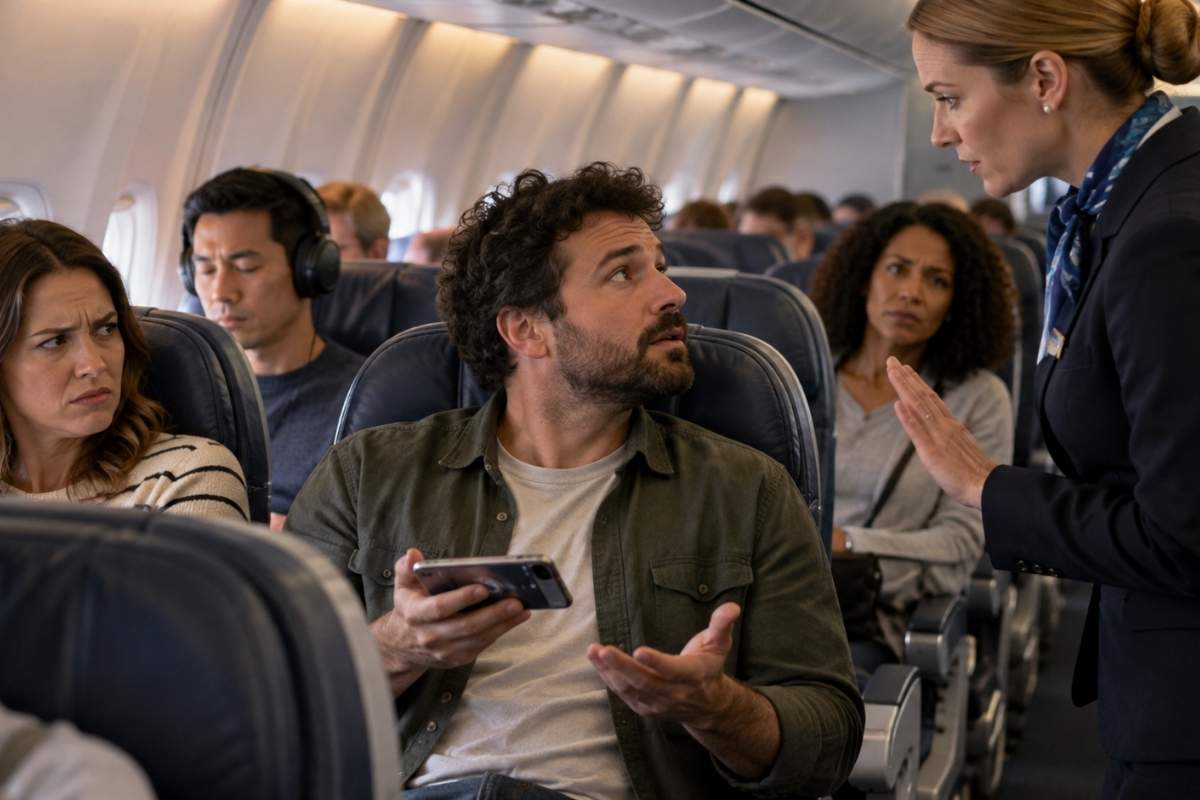
Put Your Earbuds In. United Can Now Remove Passengers Who Play Audio Out Loud
You’ve finally settled into your airplane seat, found enough legroom, and prepared for a few hours of peace. The passenger behind you opens TikTok. The first video lasts fifteen seconds, the next twenty, and you can hear every word several rows away. After ten minutes, you’re seriously considering saying something.
United Airlines can now remove passengers who play audio or watch videos without headphones. On February 27, 2026, the airline updated its contract of carriage to allow penalties that can include a permanent ban on future flights. The rule covers audio played through personal devices, including short videos on social media.
What interests us is how an ordinary airplane annoyance has earned a place among the official reasons an airline can refuse to carry someone. Most passengers will probably never have to worry about the policy. For the people who regularly find themselves next to someone else’s phone soundtrack, it gives flight crews a clearer basis for intervention.
United Has Added Headphones to Its Official Contract
The change appears in United’s Contract of Carriage, the document that establishes the terms under which the airline transports passengers.
Under Rule 21, titled Refusal of Transport, the company added a provision covering passengers who fail to use headphones for audio or video content.
The revised terms allow United to refuse transportation to someone who violates the policy. That authority can extend to future bookings, depending on the circumstances. A specific clause gives flight crews a firmer contractual basis for addressing a passenger who repeatedly refuses to lower the volume or use headphones.
His observation adds an important detail to the story. Other carriers have encouraged headphone use for years, but United has explicitly connected the requirement to its authority to refuse transportation.
What Counts as a Violation?
United’s policy applies when passengers listen to audio or watch video content with sound played through their devices.
A passenger can watch a movie with headphones. A muted phone is also fine, even if someone spends the entire flight scrolling through social media.
The problem begins when audio comes through the phone’s speaker. A short video can be disruptive, especially when a passenger moves through dozens of clips at different volume levels
The policy also applies to children who watch cartoons on tablets. Parents should have suitable headphones available or keep the device muted.
A Permanent Ban Is Possible
A lifetime ban is the most serious consequence associated with the revised policy.
United can refuse future transportation to passengers who violate its contract. The terms also address certain expenses that may arise because of passenger conduct. According to ABC News, passengers removed under the policy may qualify for a refund in certain circumstances.
There is an important limit to what we know. Publicly available reports have not established how many people have actually received a permanent United ban for playing audio without headphones.
Forgot Your Headphones? United Offers an Alternative
Anyone who travels regularly knows how easily a small item can get left at home. Headphones are particularly easy to forget when you’re in a hurry to catch a flight.
United explains on its inflight entertainment page that passengers can request complimentary earbuds when supplies are available. Availability depends on the flight, so bringing your own pair remains the safer option.
Compatibility deserves a little attention. Many newer smartphones lack a standard 3.5-millimeter headphone jack. A wired pair may require an adapter.
For families, it’s worth preparing a child’s tablet before leaving home. Download the videos your child wants to watch, then check that the headphones connect properly.
A few minutes of preparation can spare everyone an awkward conversation halfway through a long flight.
Why Did United Tighten Its Rules Now?
United had encouraged headphone use long before the February update. The revised contract makes the consequences of ignoring that expectation more explicit.
Company spokesperson Josh Freed explained to The Washington Post that United’s Wi-Fi rules had already reminded customers to use headphones.
The airline is also expanding access to high-speed Starlink internet aboard its aircraft.
Greater internet access allows passengers to stream more content during flights. That can make personal devices particularly attractive to travelers who prefer their own entertainment.
In a cabin with several hundred passengers, even a handful of phones playing audio simultaneously can become irritating.
How Other Airlines Handle the Issue
Delta Air Lines also encourages passengers to use headphones out of consideration for others. Southwest has rules concerning audio on personal devices.
A comparison by The Points Guy examines how United’s new contract differs from the approach of other carriers.
The distinctions matter for frequent travelers who switch airlines. Each carrier maintains its own conditions of transportation, and the consequences for misconduct can differ.
Checking the policy before a trip is worthwhile, particularly if you plan to use a personal tablet throughout the flight.
Passengers Like the Idea, but Enforcement Raises Questions
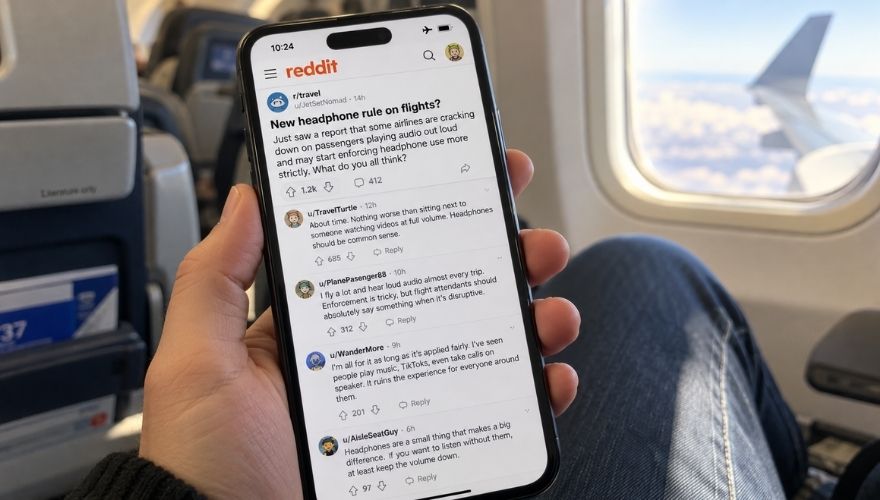
A Reddit discussion in the United Airlines community attracted considerable attention in March 2026.
One participant reported taking approximately 25 to 30 flights per year. According to that person’s own estimate, loud audio from other passengers was a problem on roughly a third of those trips.
Another commenter described a flight where a passenger allegedly watched TikTok videos aloud for hours without intervention from the crew.
Such accounts are individual experiences. They cannot establish how frequently the issue occurs across United’s network.
Still, the comments raise a reasonable concern about enforcement.
Some passengers expect the updated contract to encourage quicker intervention. Others doubt that cabin crews will apply the rule consistently.
The more interesting question is what happens after an initial warning has been ignored. Written rules can support crew decisions, provided employees have the authority and backing to apply them.
What to Do When Someone Plays Loud Audio Near You
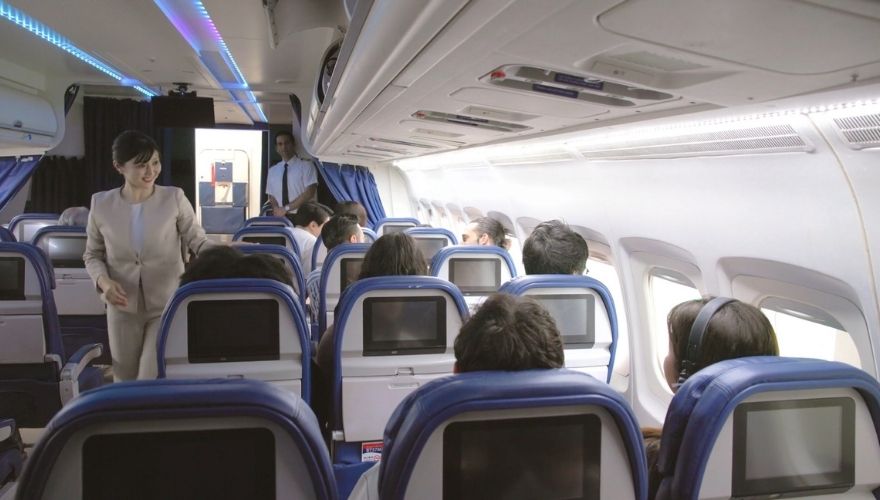
You’re seated next to someone who starts a video without headphones. The noise bothers you, and the passenger continues to use the phone. You can politely ask the person to lower the volume. If you expect the conversation to become uncomfortable, speak to a flight attendant instead.
In a Travel + Leisure article, cabin crew members explain why passengers should report disruptive audio to employees.
A member of the American Airlines cabin crew advised passengers to raise the issue discreetly and allow the staff to address it.
That’s a reasonable approach. Flight attendants know their airline’s rules and have the authority to intervene.
An argument between passengers can make an uncomfortable flight even less pleasant. If someone becomes aggressive after a warning, further intervention belongs with the crew.
A Small Rule That Could Make Flights More Pleasant
United’s decision puts a familiar expectation into clear contractual language.
An airplane cabin is a shared space. Someone may be trying to sleep, and the person across the aisle might be halfway through a book. Everyone has their own plans for the hours spent aboard.
Passengers can enjoy a movie through headphones without forcing anyone nearby to hear it.
Before your next flight, check your earbuds’ battery and put them somewhere accessible in your carry-on bag.
A little preparation seems like a reasonable price for a quieter flight.