Your Thanksgiving Leftovers Are on a Two-Hour Clock. Here’s When It Starts
You know that point near the end of Thanksgiving dinner when you’re secretly ready for everyone to go home? It’s a little rude to admit, but the dishes have piled up, the conversation has gone on long enough, and there’s still a mountain of food to put away. Tossing the leftovers straight into the trash might almost seem easier than dealing with another three days of turkey in the fridge. And occasionally, throwing the food away really is the safer choice.
According to the USDA’s Thanksgiving food safety guidelines, perishable leftovers must be refrigerated within two hours of cooking or removal from temperature-controlled storage. The clock starts when cooked food is no longer kept at a safe temperature, often well before the last guest leaves. If the surrounding temperature exceeds 90°F, the limit drops to just one hour.
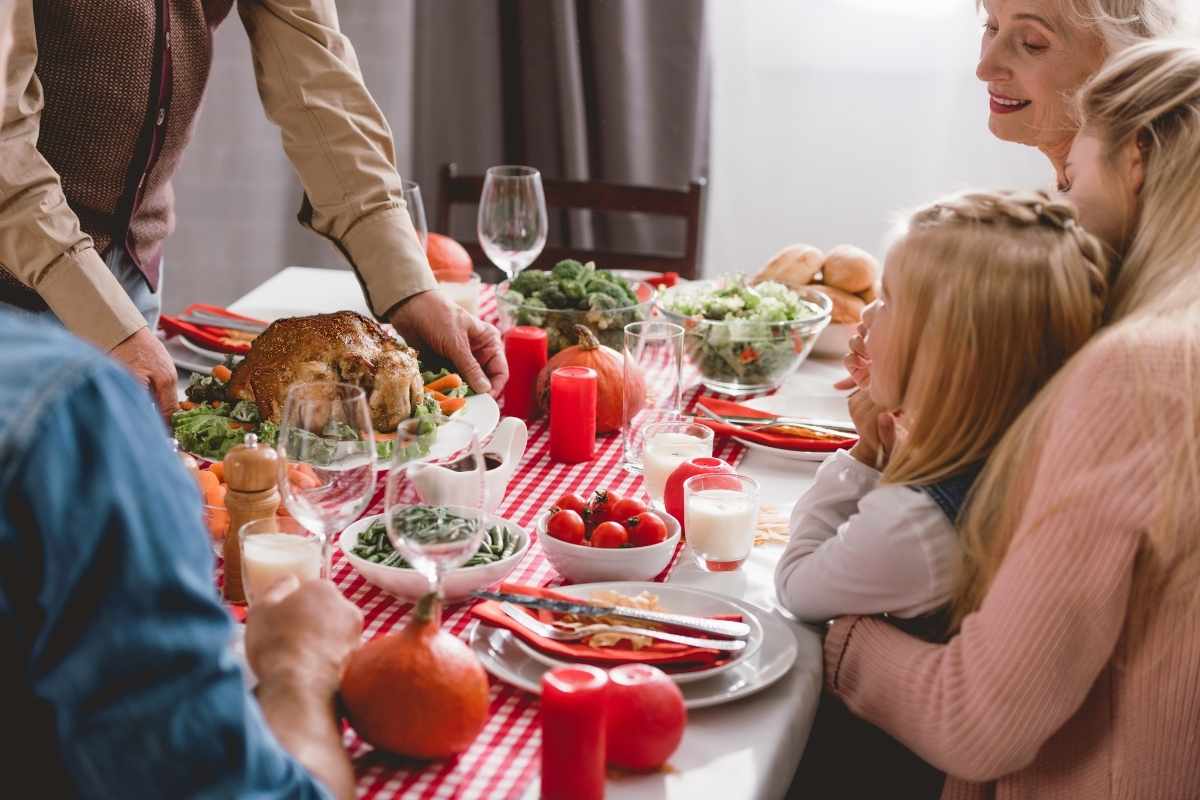
It’s surprisingly easy to miscalculate that window. Your turkey may have spent 40 minutes on the kitchen counter before anyone sat down to eat. That time counts, even if dinner feels like it has barely started.
The Two-Hour Rule Starts Before Dinner Ends
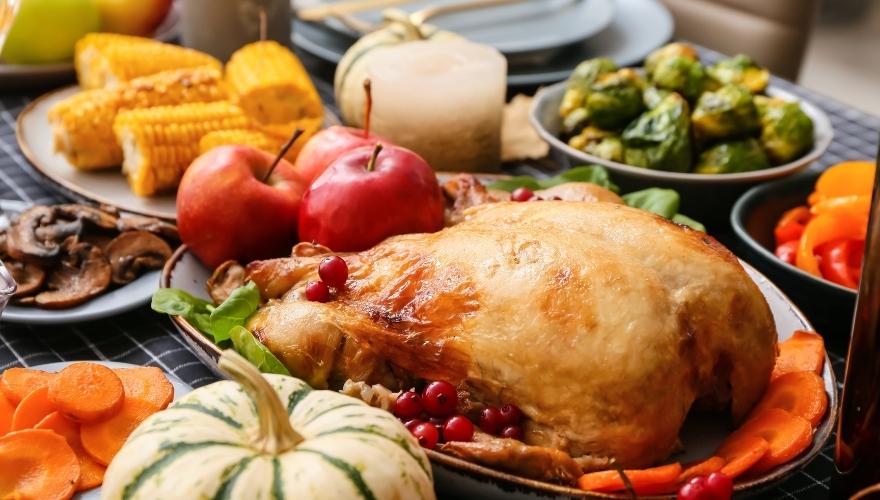
Bacteria that cause foodborne illness can multiply rapidly between 40°F and 140°F, a range the USDA calls the Danger Zone.
Once you remove the turkey from the oven and leave it on the counter, you should start tracking the time. Food kept continuously at 140°F or hotter is protected by a different temperature-control rule. Cold dishes need to stay at 40°F or below.
For a typical Thanksgiving dinner, where dishes gradually cool on the table, the two-hour limit applies.
Each dish also has its own deadline. A potato salad taken out of the refrigerator at 12:30 p.m. may need to go back before a turkey removed from the oven at 1:20 p.m.
Check the clock when the food comes out rather than attempt to reconstruct the entire afternoon after dessert.
Your Turkey Comes Out at 1:20 p.m. How Long Do You Have?
Consider a fairly ordinary Thanksgiving schedule.
The turkey comes out of the oven at 1:20 p.m. You carve it and finish the side dishes. Everyone sits down at 2 p.m., and dinner wraps up around 3 p.m. The family stays at the table for another hour.
The turkey should be refrigerated by 3:20 p.m., assuming it hasn’t been kept at a safe hot-holding temperature.
Wait until 4 p.m., and the meat has spent two hours and 40 minutes without proper temperature control. USDA guidance recommends discarding perishable food left at room temperature beyond the two-hour limit.
Could you simply reheat it?
Properly stored leftovers should reach an internal temperature of 165°F when reheated. However, some bacterial toxins can survive high temperatures, so reheating cannot reliably rescue food that has been left out too long.
It isn’t worth gambling on a questionable container of turkey just to avoid wasting a few portions.
Why Do Some Food Safety Rules Allow Four Hours?
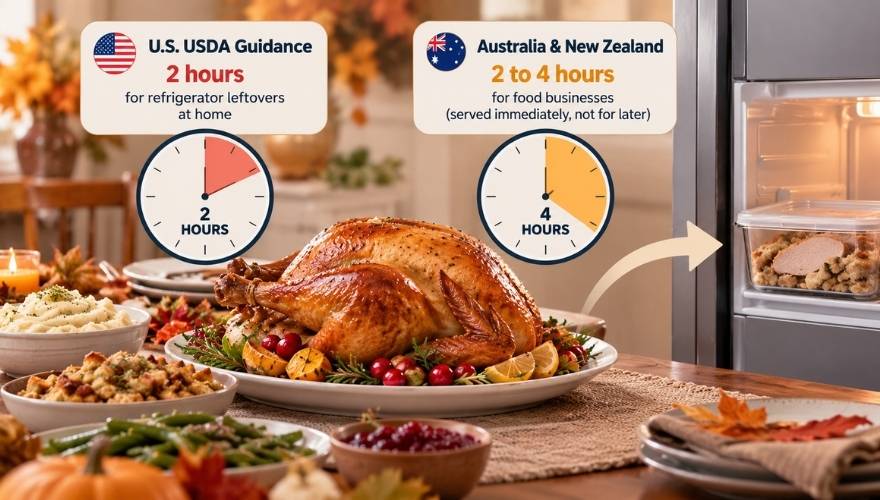
You may have seen advice online that allows food to remain outside the refrigerator for four hours. There’s a legitimate reason for that recommendation. Food Standards Australia New Zealand uses a separate two-hour/four-hour rule for potentially hazardous food handled by food businesses.
Under that system, food kept between 41°F and 140°F (5°C and 60°C) for two to four hours can be served or sold immediately. It cannot return to refrigeration for later use.
The rule also counts the total time spent outside safe temperature control, including preparation and transportation.
For American households that plan to save Thanksgiving leftovers for another meal, the USDA’s two-hour guidance remains the appropriate standard.
Someone could easily read the Australian rule and assume a turkey may sit on the dining table all afternoon before going into the refrigerator. Unfortunately, that interpretation could leave tomorrow’s lunch unsafe.
How to Put Away Leftovers Without Another Hour in the Kitchen
Here’s some good news for anyone who’s already tired of holiday cleanup. Hot food can go directly into the refrigerator.
You don’t need to leave an entire turkey on the counter until it reaches room temperature. Cut the meat into smaller portions and place it in shallow containers so it cools faster.
Do the same with mashed potatoes and other perishable side dishes. A large, deep container takes longer to cool, even inside the refrigerator. Prepare the containers before guests arrive. After dinner, a few minutes of work can take care of the food, leaving the dishes for later.
Properly refrigerated leftovers can last three to four days. For Thanksgiving 2026, which falls on Thursday, November 26, that means Monday, November 30, is the last day to eat or freeze leftovers stored promptly after dinner.
The USDA’s leftover storage guidance recommends shallow containers for rapid cooling. Frozen cooked turkey generally maintains its best quality for about two to six months.
What if Guests Take Leftovers Home?
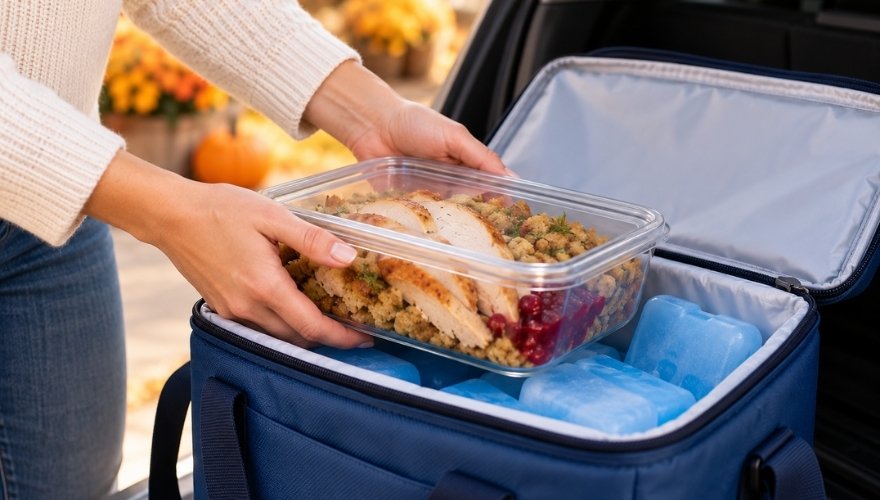
The trip home adds another complication.
Suppose the turkey has already spent 90 minutes on the table. Your guest then drives home with a container of meat in a warm car for another hour.
The total time without adequate temperature control becomes two and a half hours, exceeding the recommended limit.
An insulated cooler with ice packs can help keep food at 40°F or below during transportation. For relatives who live farther away, that’s a better option than handing them a warm container just before they leave.
The Plan for the End of Thanksgiving Dinner
Put the leftovers away before the guests leave. There’s little reason to wait until every conversation ends, especially when the food can be packed in a few minutes. And if you’re a guest, offering to help with the turkey is perfectly good manners. Your host may appreciate that more than another debate about who makes the best mashed potatoes.
An empty kitchen counter sounds appealing after a long holiday meal. But food that took hours to prepare is worth saving, provided it has been handled safely.
Here’s a practical Thanksgiving arrangement: the dishes can wait until later. The turkey goes into the refrigerator on time.
Guests are welcome to stay until midnight. The turkey has a much earlier deadline.